Tree Trimming in Asheboro, NC
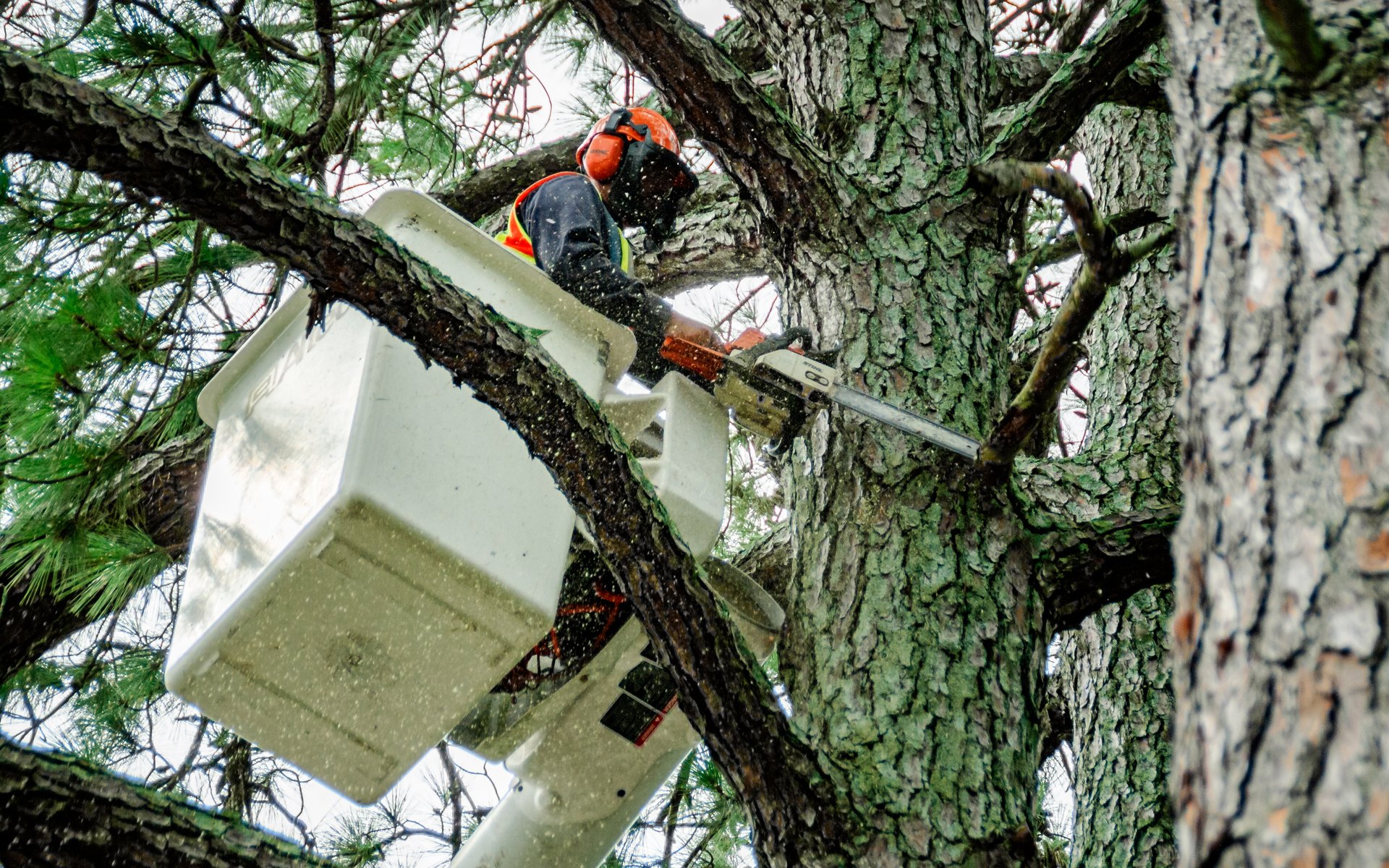
Stock photo. It does not show our crew or equipment.
Good trimming starts with what is wrong inside the tree. We take out dead, damaged, diseased and rubbing branches first. Dead wood can drop without warning, and branches that rub together wear open wounds where insects and decay get in. Removing them makes the tree safer and helps it stay healthy. If a tree is too far gone to save, we will tell you, because removal is sometimes the safer choice.
Thinning and shaping should help a tree, not stress it. We open up a thick crown so light and air can move through, and we keep the natural shape of the species. A common safe guideline is to remove no more than about a quarter of the canopy in one year. Taking too much leaves a tree short on the leaves it needs to make food. If a tree needs more work, we can spread it over more than one visit.
Clearance, meaning tree limb removal over roofs, driveways and walkways, is a big reason people call us. Limbs that scrape a roof, fill a gutter, block a driveway or hang over a sidewalk cause damage and safety problems. We cut back to a healthy branch or the trunk, and we make each cut just outside the branch collar, the slightly raised ring where a branch meets the trunk. That lets the tree close over the wound on its own. Flush cuts and long stubs both slow healing. Trees that touch or sit close to power lines are a job for the utility company first; tell us if lines run through your tree.
We do not top trees. Topping means chopping large limbs back to stubs, and it harms the tree. The big wounds seal poorly and can rot, and the fast shoots that grow back are weakly attached and break easily. Timing matters too. The best season depends on the species and your goal. Some trees are best pruned while dormant, spring bloomers right after flowering, and dead branches can come out any time.
What's Included
- Removal of dead, damaged, diseased and rubbing branches
- Crown thinning and shaping that keeps the tree's natural form
- Clearance from roofs, gutters, driveways, sidewalks and structures
- Proper cuts just outside the branch collar, with no flush cuts or stubs
- Pruning timed to your tree's species and what you want from the work
- Honest advice when a tree is better removed than trimmed
When to Call Us
- Bare, dead-looking branches while the rest of the tree is in leaf
- Limbs touching or scraping your roof, siding or gutters
- Branches hanging over a driveway, a sidewalk or the spot where you park
- Branches crossing and rubbing, or a crown so dense the inside stays dark
- Cracked or hanging limbs after a storm, which we can treat as an emergency
Tree Trimming Near Asheboro, NC
We handle tree cutting and trimming in Asheboro and across Randolph County, from Randleman and Archdale to Seagrove and Ramseur, and anywhere in North Carolina and South Carolina. In central North Carolina, summer thunderstorms and winter ice put heavy loads on branches, so clearing dead wood and limbs over roofs and driveways before storm season is time well spent. See all the areas we serve.
Tree Trimming Questions
What is the difference between tree trimming and tree pruning?
Most people use the words for the same job: cutting back branches to keep a tree safe, healthy and clear of your house. "Pruning" is the more technical word for removing specific branches for the health of the tree. We do both, and we use proper cuts either way.
When is the best time to trim trees in North Carolina?
For most trees, late fall through winter, while they are dormant. Spring-flowering trees like dogwoods and redbuds are best pruned right after they bloom, and crape myrtles in late winter. Dead or broken limbs should come out any time of year.
How often should my trees be trimmed?
Young trees often need light cuts every few years to build a strong shape. Mature trees may only need a yearly look and pruning when there is a reason, such as dead wood or branches over the roof.
Will trimming hurt my tree?
Not when it is done right. We cut just outside the branch collar so the tree can seal the wound, and a common guideline is to remove no more than about a quarter of the canopy in a year. We never top trees, because topping weakens them and invites decay.
Can you trim branches near power lines?
Trees that touch or sit close to power lines are a job for the utility company first. Tell us if lines run through your tree, and we will point you to the right call before any work starts.
Do you clean up after trimming?
Yes. We clean up the work area when we finish, and we can haul the branches away or leave the chips for mulch, whichever you prefer.
How much does tree trimming cost?
It depends on the tree's height, how easy it is to reach, its health and how many trees you have done at once. HomeGuide's 2026 national figures put most trimming at $400 to $900 per tree, from about $80 for a small tree to $2,500 or more for a very large or neglected one. Those are national figures, not our prices. Your estimate is free, and you get the plan and price in writing before we start.
Can I cut my neighbor's tree branches that hang over my yard?
In most places, yes, up to the property line. HomeGuide notes that you can generally trim branches that hang over your side, but you cannot go onto your neighbor's land or harm the tree's health. Stay on your side: North Carolina law makes anyone who cuts trees on someone else's land without permission liable for three times their value. Talk with your neighbor first. This is general information, not legal advice.
Should I cut my crepe myrtle back hard every winter?
No. NC Cooperative Extension calls that "crape murder." Cutting a crape myrtle (also spelled crepe myrtle) back to thick stubs ruins its natural shape, and the branches that grow back are weak and poorly attached. Most need only light pruning in late winter, before new growth starts: take out suckers and dead or crossing branches, and cut back to a side branch instead of leaving stubs. Our guide to when to trim trees has more.