Tree Removal in Asheboro, NC
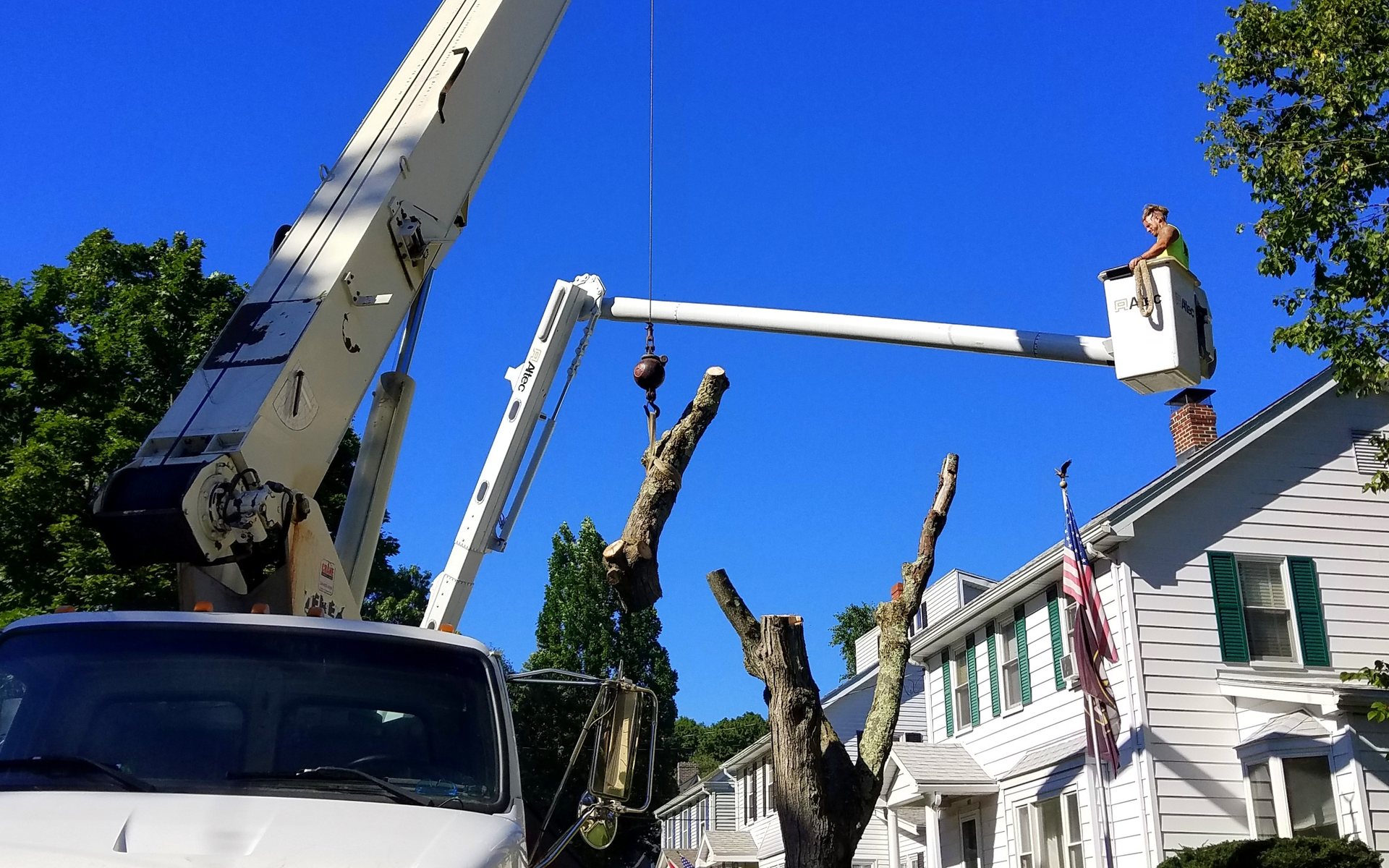
Stock photo. It does not show our crew or equipment.
Need a tree cut down? Whether you call it tree removal, tree cutting or taking a tree down, you get the plan and the price in writing first.
Removal is the right call when a tree is dead or dying, leaning hard, or damaged in a storm. It is also the safer choice when the trunk is split, cracked, or hollow with decay. Roots that are damaging a driveway, plumbing, or the ground near your house are another common reason, as are disease that keeps spreading and a building project that needs the space.
Sometimes a tree looks rough but can be saved. A few dead limbs, heavy branches over the roof, or crowded growth often just need proper pruning, and we will tell you so plainly, even if it means a smaller job for us. When we do recommend removal, we will point out what we found, such as dead wood, decay, or a lean, so you can see the reason for yourself.
Every job starts with a look at the tree and the site. We check the size of the tree, what is around and under it, and where it could land. Then we explain the plan and the price in writing before any work begins. Where there is open room, a tree can be felled. Where space is tight, we take it down in controlled sections and lower each piece.
We protect your yard as we work and clean up the work area when the tree is down. If you want the stump gone too, stump grinding is available as an add-on. Before removal, check whether your city, county, or HOA requires a permit. Rules vary from place to place, and a quick call to the right office can save you trouble later. Trees that touch or sit close to power lines are a job for the utility company first; tell us if lines run through your tree.
Trees along a state road need extra care. Under North Carolina law, trees, shrubs and brush in the right-of-way of a state road cannot be cut, trimmed or removed without a written permit from NCDOT. It is not always obvious where the right-of-way ends and your yard begins, so if the tree is near the road, check with the NCDOT district office for your county before work is scheduled. City streets can have their own rules. Rules change, so confirm with the right office first.
What's Included
- Removal of trees of any size, from small yard trees to large ones
- Dead, leaning and storm-damaged tree removal, including tall pines near houses
- Controlled removal in sections where space is tight
- Straight felling where there is open room to drop the tree
- Written plan and price before any work starts
- Yard protection during the job and cleanup when we finish
- Stump grinding as an optional add-on
When to Call Us
- The tree is dead or dying, with bare branches while nearby trees are leafed out
- The trunk is leaning more than it used to, or the soil at the base is heaving
- A storm split the trunk, snapped the top, or left a tree hung up in another tree
- Roots are lifting your driveway or working into plumbing lines
- You want a tree gone to make room for a build, a pool, or a new yard plan
Tree Removal in Asheboro and Randolph County
We remove trees for homeowners and businesses in Asheboro, Randleman, Archdale, Trinity, Liberty and the rest of Randolph County, and we take on removals across North Carolina and South Carolina. Many yards here have tall pines and big hardwoods close to houses, sheds and driveways, and those are the jobs where taking a tree down in controlled sections matters most. See all the areas we serve.
Tree Removal Questions
How much does tree removal cost in Asheboro?
It depends on the size of the tree, what is under and around it, how easy it is to reach, its condition and how much cleanup you want. National cost guides put most removals between a few hundred and a couple of thousand dollars, and our tree removal cost guide explains what moves the price. Your estimate is free and in writing.
Can you remove a tree that is close to my house?
Yes. Where there is no room to drop a tree, we take it down in controlled sections and lower each piece instead of felling it in one go. We look at the tree and everything around it before we give you the plan.
Do I need a permit to remove a tree?
Sometimes. Some cities, HOAs and historic districts have rules about removing trees, and a tree near the street may sit in a city or NCDOT right-of-way. Check with your city or county planning office and your HOA before the work is scheduled. We can help you figure out who to ask.
What happens to the wood and branches?
That is your call. We can haul everything away, leave firewood-length logs, or leave the chips for mulch. We talk through the options and what each one costs before we start.
Is the stump removed too?
Not automatically. Stump grinding is an add-on, and it can be done the same day or later. Grinding takes the stump several inches below ground so you can mow or plant over the spot.
Should I take down a big tree myself?
We do not recommend it. Large trees can fall in unexpected directions, and wood under tension can spring back when it is cut. If the tree is near a house, a fence, a road or power lines, leave it to a crew with the right equipment and insurance.
Will a pine tree leaning toward my house fall?
Not necessarily. Many trees grow with a lean. The warning signs are a lean that is new or getting worse, a dead or thinning top, and cracked or lifting soil at the base, which the International Society of Arboriculture calls a warning sign of root failure, especially in a leaning tree. If you see any of those, have it looked at before the next storm. Our warning signs guide covers the rest. If it has to come down near the house, we take it down in controlled sections.
Who removes a tree that is near a power line?
It depends on the line and the utility, so call them first. Main power lines are the utility's to keep clear. Duke Energy says the service line from the pole to your house is mainly the owner's to keep clear, and it will de-energize that line at no cost before tree work. Randolph EMC says it will disconnect that line so a tree service can cut the tree down. Once the line is safe, we can do the removal. Rules change, so check with your utility.
Is tree removal cheaper in winter?
It can be. HomeGuide, a national cost guide, reports that removal is often less expensive in winter and early spring, the off-season for tree services, and that prices can run 10% to 20% higher in summer and fall when demand peaks. Those are national figures, not our prices. Winter has another plus: with the leaves off, dead wood and a tree's structure are easier to see. A dead or dangerous tree should not wait for a season, though.