Land Clearing in Asheboro, NC
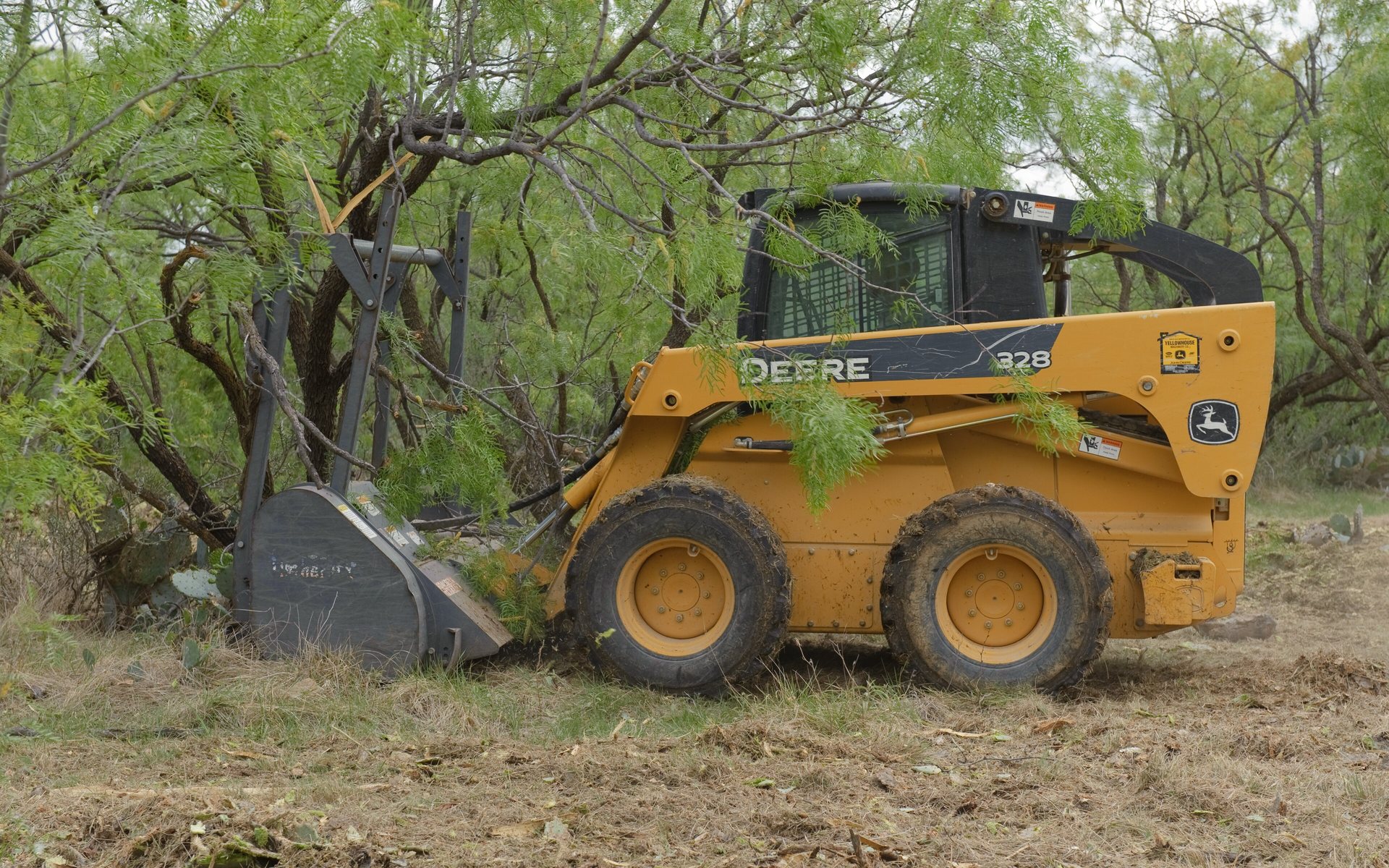
Stock photo. It does not show our crew or equipment.
Land clearing turns overgrown or wooded ground into ground you can use. People call us to open up a building lot, run a driveway or fence line, win back a pasture or yard that brush has taken over, or make room for a shop, a pool or a garden. We remove the trees, brush and stumps that are in the way, and we leave the rest alone.
Every job starts with a walk of the property. We look at what is growing there, how thick it is, where the slopes and wet spots are, and what you want the finished ground to look like. You tell us which trees you want to keep, and we plan around them. Then we put the plan and the price in writing before any work begins, so you know exactly what is included.
What happens to the wood and brush is your call. Depending on the job, it can be cut up, chipped, hauled off, or left for you to use. We talk through the options and what each one costs before we start. If you want the stumps gone too, stump grinding can be added to the job.
Before clearing starts, check whether your city, county, or HOA requires a permit. Rules vary from place to place. If any digging is involved, call 811 first so underground utilities get marked. We can point out what to ask about, and we will not start until you are ready. You talk directly with the owners from the first call through cleanup.
North Carolina's erosion rules cover clearing, not just grading. If a project will disturb more than one acre, an erosion and sedimentation control plan must be filed at least 30 days before work starts and approved before any land is disturbed. Cutting trees as the first step toward building counts; the forestry exemption covers only land that will grow back into trees. Smaller jobs still have to keep sediment from washing off the site. Some cities and counties run their own erosion programs, and elsewhere the plan goes to NC DEQ. Rules change, so check early and build the 30 days into your schedule.
What's Included
- Tree and brush clearing from lots, fence lines, driveways and pastures
- Clearing land to build a house, set a mobile home, put up a shop or open up a pasture
- Selective clearing that keeps the trees you want to save
- Stump grinding as an optional add-on
- Cleanup of the cleared area, with the wood and brush handled the way you choose
- Written plan and price before any work starts
- Direct contact with the owners from the first call through cleanup
When to Call Us
- You are getting ready to build and the lot is wooded or overgrown
- Brush and small trees have taken over a fence line, driveway edge or pasture
- You want to open up a yard, field or view that has grown in
- You need room for a shop, pool, garden or new driveway and want to know what it takes
- Storm damage or years of neglect left downed trees and tangled growth
Land Clearing in Randolph County, NC
Jacob Fisher runs our land clearing work in Asheboro and across Randolph County, including Randleman, Liberty, Ramseur, Seagrove and Franklinville, and we clear land throughout North Carolina and South Carolina. Much of the county is wooded, rural land, and clearing is often the first step before building a home or shop, running a driveway or fence line, or bringing an old pasture back into use. See all the areas we serve.
Land Clearing Questions
Who handles your land clearing work?
Jacob Fisher, one of our two owners. He has run heavy equipment on land clearing jobs for nearly six years, and you deal with him directly from the first call through cleanup.
Can you keep the trees I want to save?
Yes. Selective clearing is part of every job. Walk the property with us, tell us which trees stay, and we plan the work around them.
What happens to the trees and brush you clear?
Depending on the job, the wood and brush can be cut up, chipped, hauled off, or left for you to use. We go over the options and what each one costs before we start.
Do I need a permit to clear land?
It depends on the size of the project and where it is. In North Carolina, a land-disturbing project of more than one acre generally needs an approved erosion and sediment control plan before work starts, and cities, counties and HOAs have their own rules. Check with your county or city planning office before clearing starts.
Can you clear a lot for a new house, shop or driveway?
Yes. Building lots, driveways, fence lines, pastures and spots for a shop, pool or garden are all common clearing jobs. If any digging is involved, call 811 first so underground utilities get marked.
Are the stumps removed as part of land clearing?
Stump grinding can be added to any clearing job. We will include it in the written estimate if you want the stumps gone.
How much does it cost to clear an acre of land?
It depends on how thick the growth is, the size of the trees, the slope, access and what happens to the wood. HomeGuide's national figures put most clearing at $1,200 to $8,000 per acre, from about $1,200 to $2,500 for brush and small trees to $4,500 to $8,000 for dense woods with large trees. Those are national figures, not our prices. Clearing for a house may also need grading, a separate cost. Your estimate is free and in writing.
Can I burn the brush after land clearing?
Sometimes, if you follow the rules. Randolph County says you may burn only what grows naturally on your property, and you may need a free NC Forest Service permit, which you can get online. State air rules keep land-clearing burn piles at least 500 feet from occupied buildings and allow burning only from 8 a.m. to 6 p.m. on Code Green or Code Yellow air-quality days. A burn ban overrides any permit. Inside town limits, ask the town. Rules change, so check before you burn.
Can you clear right up to my property line?
Yes, once we know exactly where the line is. North Carolina law makes anyone who cuts trees on someone else's land without permission liable for three times their value, and a contractor given the wrong lines can recover that from the person who hired them. So before clearing near a boundary, make sure the line is clearly marked, and talk with your neighbor about any trees right on it. If you are not sure where it is, a survey settles it. This is not legal advice.